Crow & CabbageGarden Desk · Plot & Plate
A Southern Hemisphere card
Growing garlic
Seasons are reversed. Months are given only when sourced. This card draws on NSW DPI (Australia). Units are metric and imperial.
Find your local timing. Ask a local agriculture department or horticultural society, and use local seasonal dates — not Northern Hemisphere months, and not invented months for other countries.
Key steps
- Garlic has no true seed; grow it from cloves. Do not break bulbs into cloves until shortly before planting. Discard the small centre cloves. Use fertile, well-drained, loamy soil; heavy clay may cause misshapen bulbs.[1]
- In New South Wales, garlic is a winter/spring crop, planted mainly in autumn (March/April). In southern NSW, plant in March/April; plants grow through winter into spring; bulbs form with warmth and longer days; maturity is from early November to January.[1]
- Harvest months in that fact sheet (Australian Garlic Industry Association): Queensland September; NSW early to mid-November; Victoria and South Australia early December/January; Tasmania and Gippsland late December/late January.[1]
- The fact sheet does not give a home-garden planting depth. Its commercial field spacing is 100 mm (10 cm / 4 in) between plants and 200 mm (20 cm / 8 in) between rows.[1]
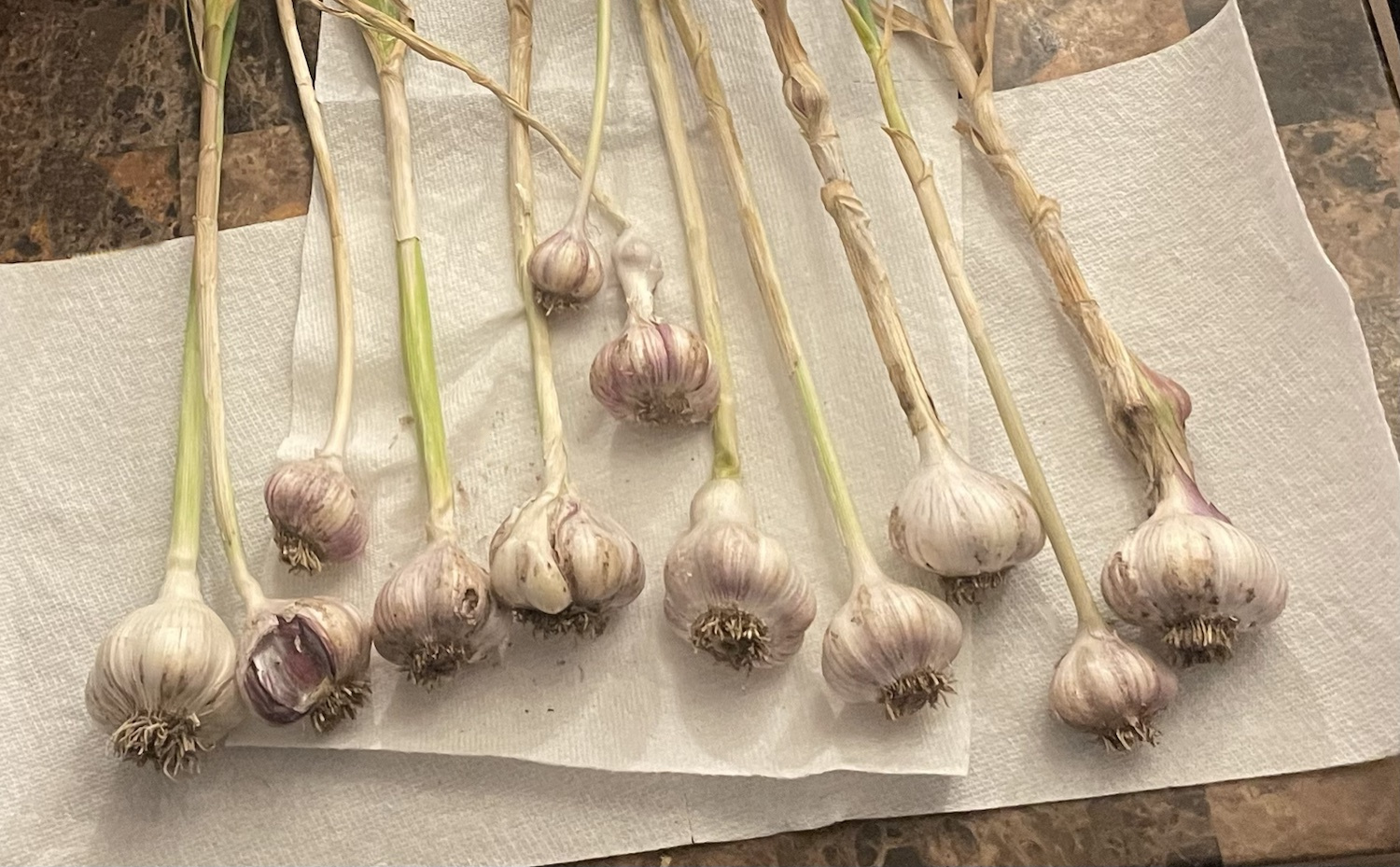
- Water to wet the soil to about 60 cm (24 in). Stop when tops yellow or necks soften. Harvest when necks begin to soften and are partly dry; waiting several more weeks can cause cloves to separate, discolour, or sunburn. Cure in shallow layers, or in a well-ventilated shed if rain or dew is likely. Store dry and well cured in a cool, dry, airy place (at least three months in those conditions).[1]
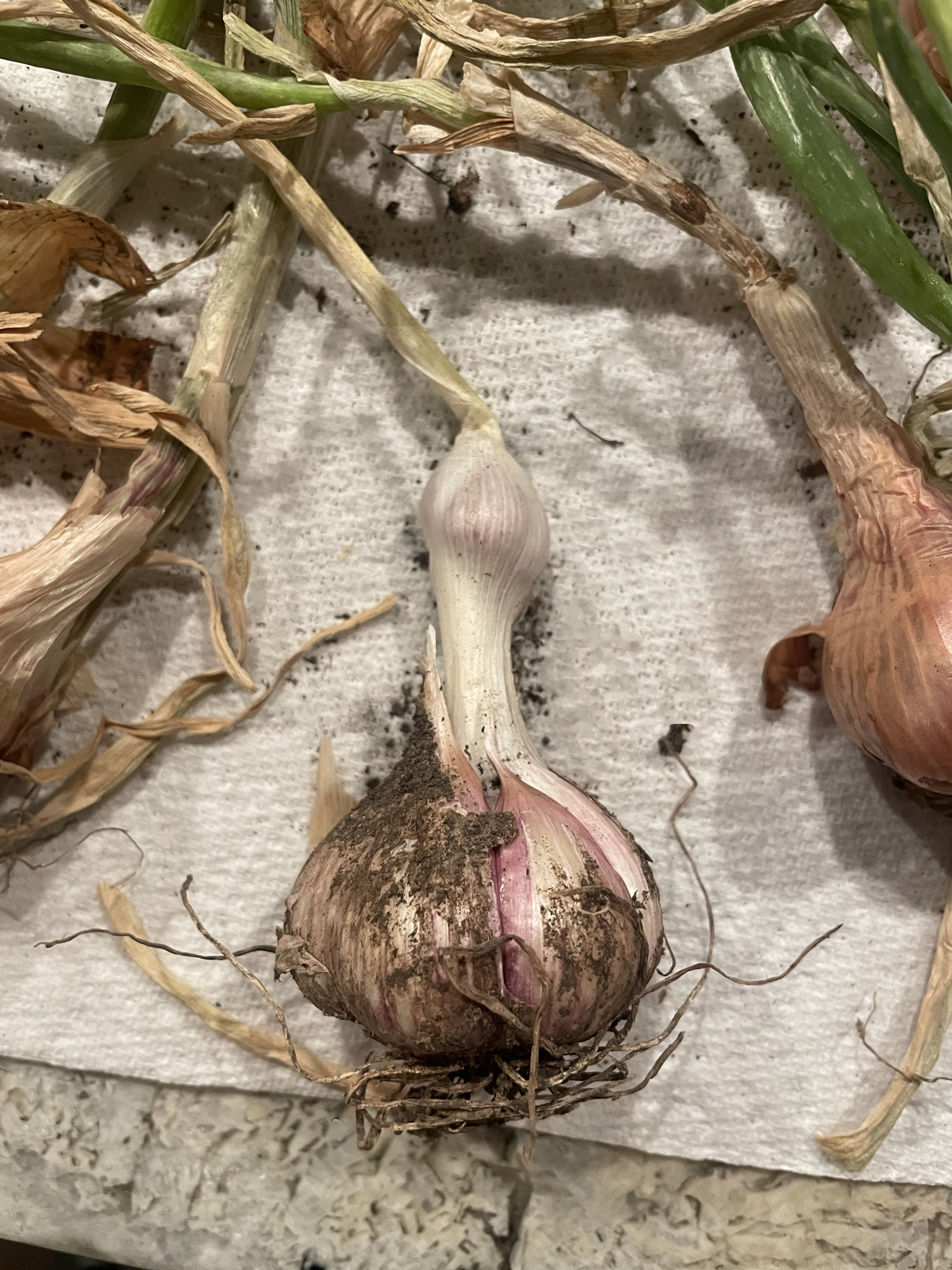
A storage caution. For bulbs to be replanted, NSW DPI gives an optimum of 10°C (50°F), limits 5–18°C (41–64°F). Storage at 4°C (39°F) for several months can cause rapid sprouting but also side shoots, early maturity, and rough bulbs. Do not assume fridge-chilling advice from other climates applies here.[1]
Full worldwide garlic guide