Crow & CabbageGarden Desk · Plot & Plate
A worldwide climate card
Growing garlic
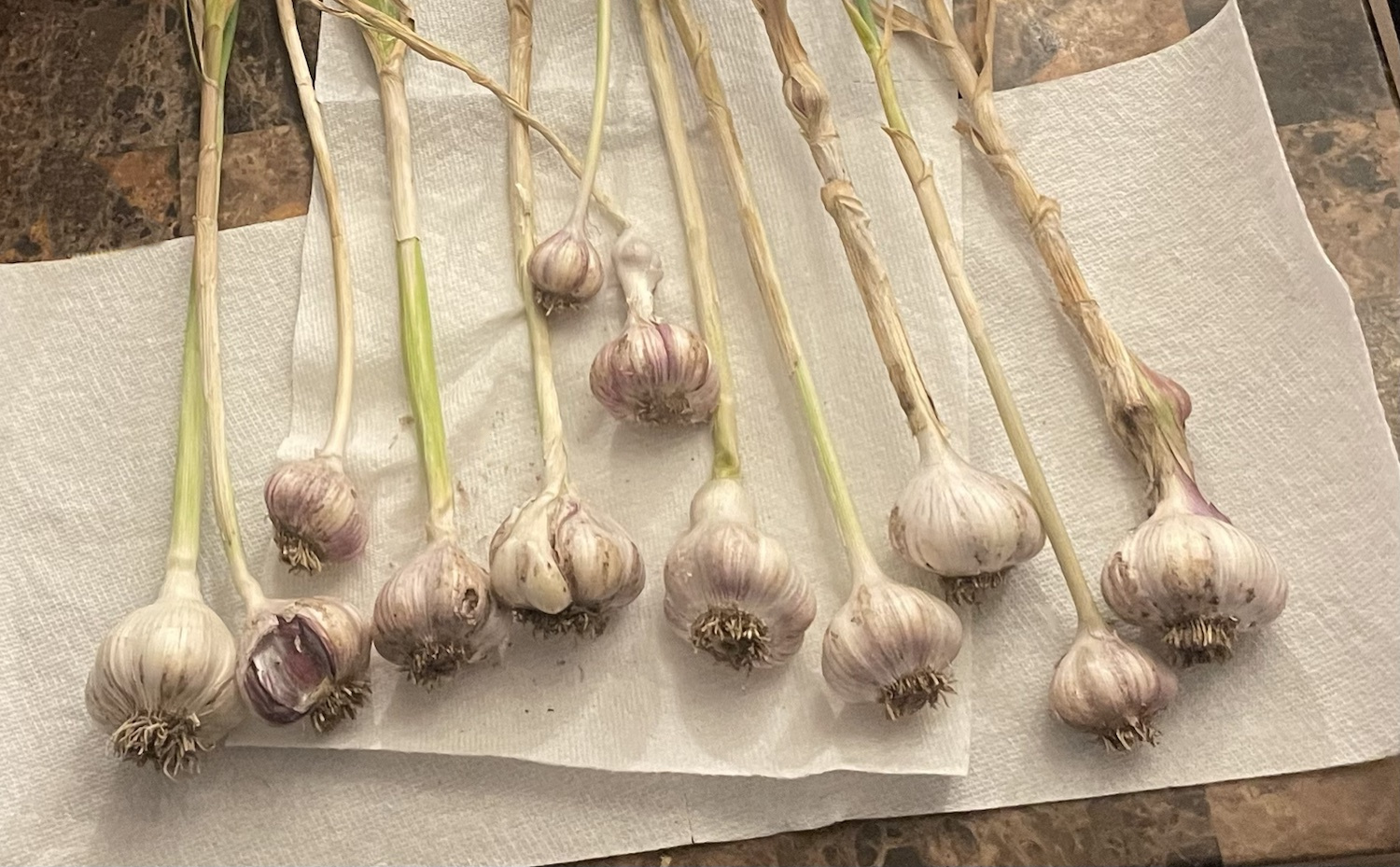
People grow garlic in many climates. Type and timing depend on winter cold. Follow the guidance for your climate and check local growing conditions.
Jump to sourcesFind your local timing
Do not use a frost date invented here. Ask a local extension, agriculture department, or horticultural society, and check local frost dates from a meteorological service.
Lessons from my own garlic patch · Read the full planting-to-storage guide
Core steps
- Grow from cloves, not true seed. Prefer named planting garlic over supermarket bulbs, which may be unsuited to your climate or carry disease.[2][3]
- Split shortly before planting; leave the skin on; plant pointed end up in full sun and well-drained soil.[1][3]
- Depth and spacing differ by source: tip 2.5 cm (1 in) deep, 15 cm (6 in) apart (RHS);[3] 5–8 cm (2–3 in) deep, 8–10 cm (3–4 in) apart (USU);[1] 5 cm (2 in) deep, 10 cm (4 in) apart (UC ANR).[4]
- Stop watering when the leaves start to mature (turn yellow).[1] The RHS says not to water once the bulbs are large and well formed; yellowing foliage is a sign they are reaching that stage.[3] Harvest when the tops begin to yellow or start to fall over, but before they are completely dry. Lift with a fork.[1] The RHS harvests once the leaves have turned yellow.[3] Minnesota Extension harvests when lower leaves are brown and about half the upper leaves are still green.[2] Cure in a warm, dry, airy place. RHS says initial drying takes two to four weeks; Minnesota Extension says three to four weeks. Store cool, dry, and airy; recommended temperatures disagree.[3][2][1]
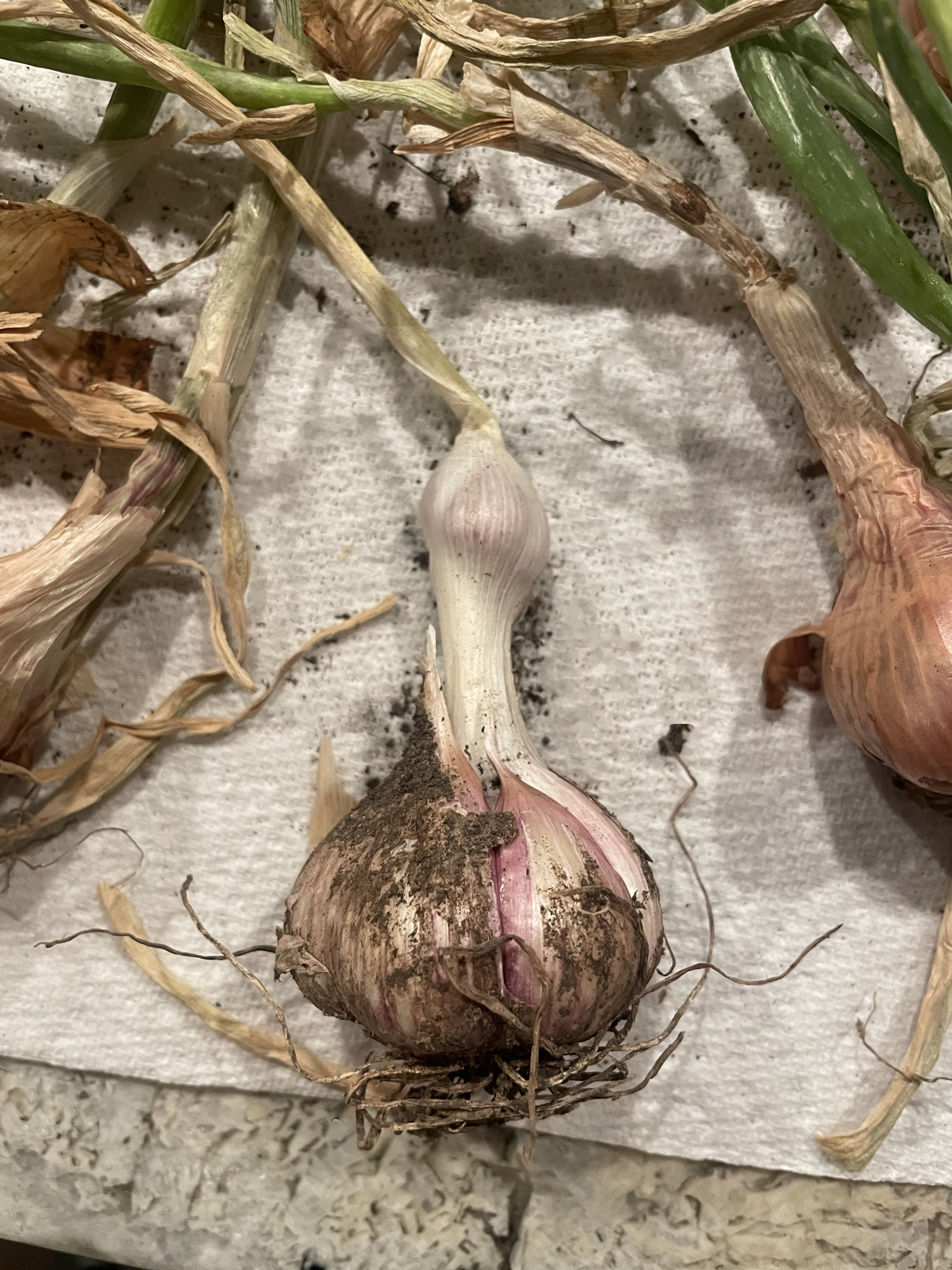
Hardneck: fewer, larger cloves, often a cut-and-eat flower stalk (scape), shorter storage. Softneck: more cloves, usually longer storage, good for braiding.[1][3]
By climate
- Cold winters. Hardneck is usually preferred for cold hardiness.[2][10] Plant in autumn so roots grow before the ground freezes. Minnesota Extension often plants 1–2 weeks after the first killing frost;[2] the RHS (UK) usually plants mid-autumn to early winter, as most varieties need 1–2 months at 0–10°C (32–50°F).[3]
- Mild, Mediterranean, or subtropical winters. Softneck is often preferred and needs less chill.[10][7] Florida IFAS: plant late autumn through early winter; try softneck types such as Artichoke or Creole.[5] UC ANR: autumn planting for largest bulbs; many California regions October–December (desert valleys September–November).[4] Texas A&M’s crop guide gives an optimum planting time when soil temperature at 5 cm (2 in) depth is below 29°C (85°F); garlic needs 6–8 weeks below 4°C (40°F) to vernalize.[6] The Florida IFAS page cited here does not tell home gardeners to pre-chill cloves for a normal autumn planting.
- Hot or tropical. Only what sources say. University of Hawaiʻi CTAHR requires artificial chilling there: refrigerate at 4°C (40°F) for 1–2 months (trials used October–December), then plant December–February. Without that cold, plants may grow leaves but form little or no bulb. Success has been shown above about 150 m (500 ft) in named Hawaiʻi locations.[8] A Central Texas AgriLife article suggests refrigerating hardneck for a few weeks in a mild winter.[7]
- Southern Hemisphere. Seasons are reversed. Months only when sourced: NSW DPI (Australia) says the main planting time is autumn (March/April); southern New South Wales is planted March/April and harvested from early November to January.[9]
Sources
- USU Extension garlic fact sheet (Drost, 2020)
- University of Minnesota Extension, growing garlic
- RHS (UK), “How to grow garlic”
- UC ANR / UC IPM, onions and garlic
- University of Florida IFAS, “Garlic”
- Texas A&M AgriLife garlic crop guide
- Texas A&M AgriLife, Travis County (2022)
- Hawaiʻi CTAHR garlic guidelines (2022)
- NSW DPI, “Growing garlic in NSW”
- UC Master Gardeners, Contra Costa County