Crow & CabbageGarden Desk · Plot & Plate
A cold-winter climate card
Growing garlic
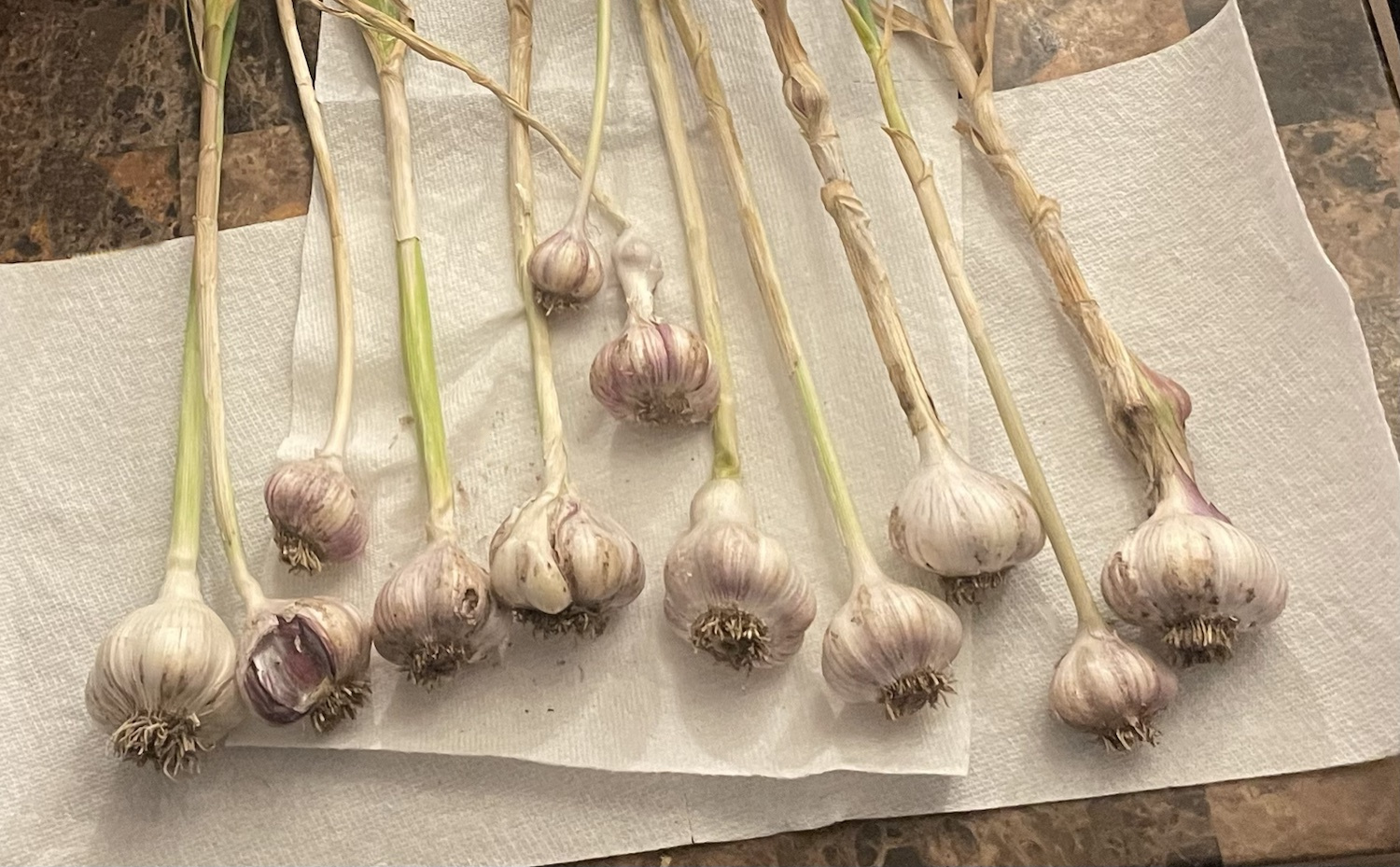
For climates with a real winter. Hardneck types are usually preferred. Follow the guidance for your climate and check local growing conditions.
Find your local timing. Do not use a frost date invented here. Ask a local extension, agriculture department, or horticultural society, and check local frost dates from a meteorological service.
Key steps
- Grow from cloves, not true seed. Prefer named planting garlic over supermarket bulbs, which may be unsuited to a cold climate or carry disease.[1][3] Split shortly before planting; leave the skin on; plant pointed end up in full sun and well-drained soil.[3]
- Hardneck is usually preferred for cold hardiness.[1] Plant in autumn so roots can grow before the ground freezes. In cold-winter areas, mulch can protect plants; autumn planting generally makes the largest bulbs.[4]
- Depth and spacing examples: the RHS plants with the tip 2.5 cm (1 in) below the surface, 15 cm (6 in) apart, rows 30 cm (12 in);[3] Minnesota Extension plants 5–8 cm (2–3 in) to the base of the clove, about 15 cm (6 in) apart.[1]
- Reduce or stop water when leaves yellow. If a flower stem (scape) forms, snip it off.[3] Harvest when leaves yellow;[3] Minnesota Extension harvests when lower leaves are brown and about half the upper leaves are still green.[1] Cure in a warm, dry, airy place. RHS says initial drying takes two to four weeks; Minnesota Extension says three to four weeks. Store cool, dry, and airy.[3][1]
Sources disagree on the planting week. Minnesota Extension often plants 1–2 weeks after the first killing frost.[1] A Cornell Cooperative Extension guide mentions planting as early as 6–8 weeks before the first expected frost.[2] The RHS usually plants mid-autumn to early winter, because most varieties need 1–2 months at 0–10°C (32–50°F).[3]
Full worldwide garlic guideSources
- University of Minnesota Extension, growing garlic
- Cornell Cooperative Extension (Schoharie–Otsego)
- Royal Horticultural Society (UK), “How to grow garlic”
- UC ANR / UC IPM, onions and garlic
- USU Extension, “How to Grow Garlic in Your Garden” (Drost, 2020)
Lessons From My Garlic Patch
Sometimes the garden teaches you things the hard way!
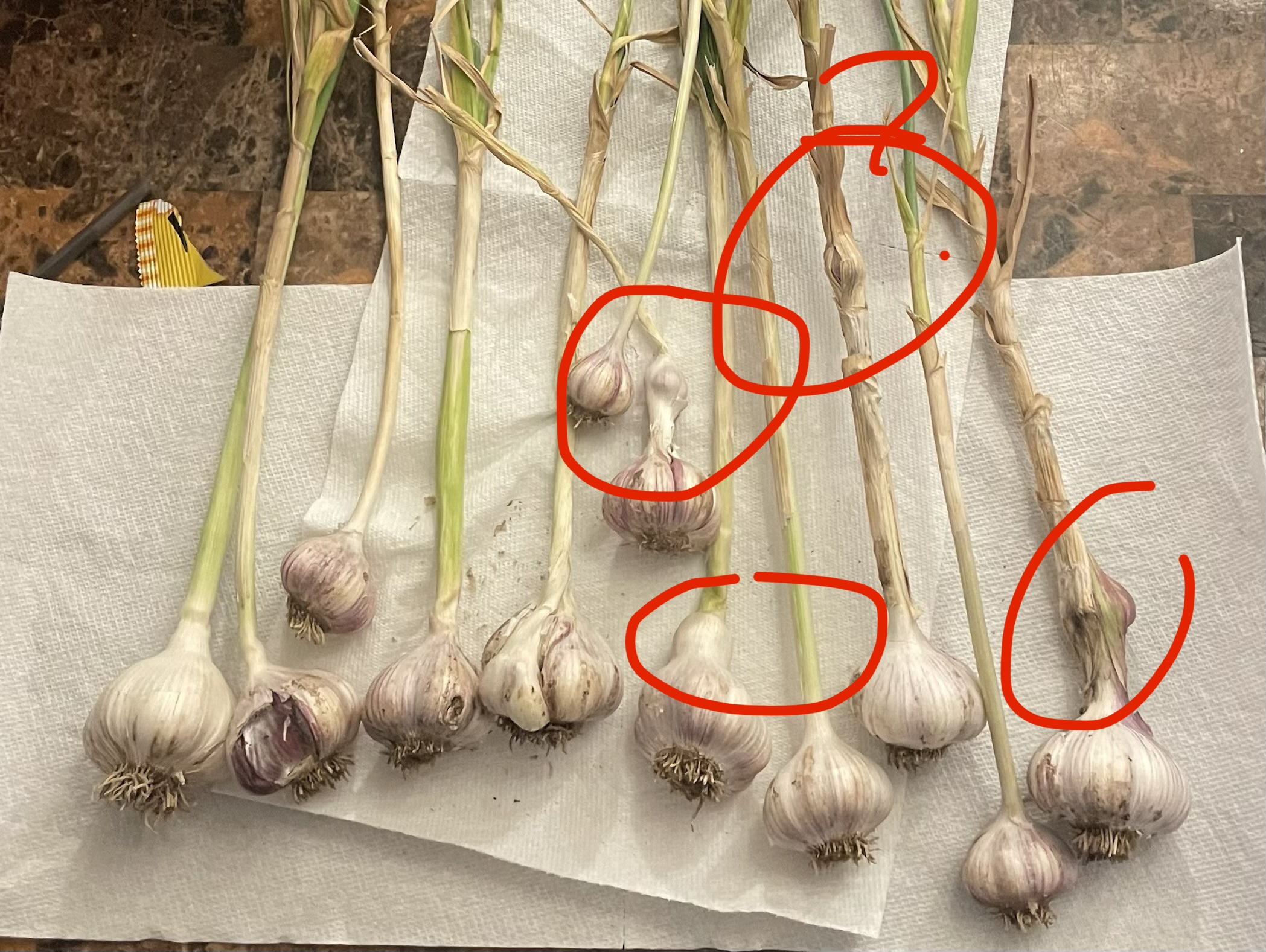
One year, I left some of my garlic in the ground a little too long. By harvest time, the protective wrappers had started breaking apart, exposing the cloves.
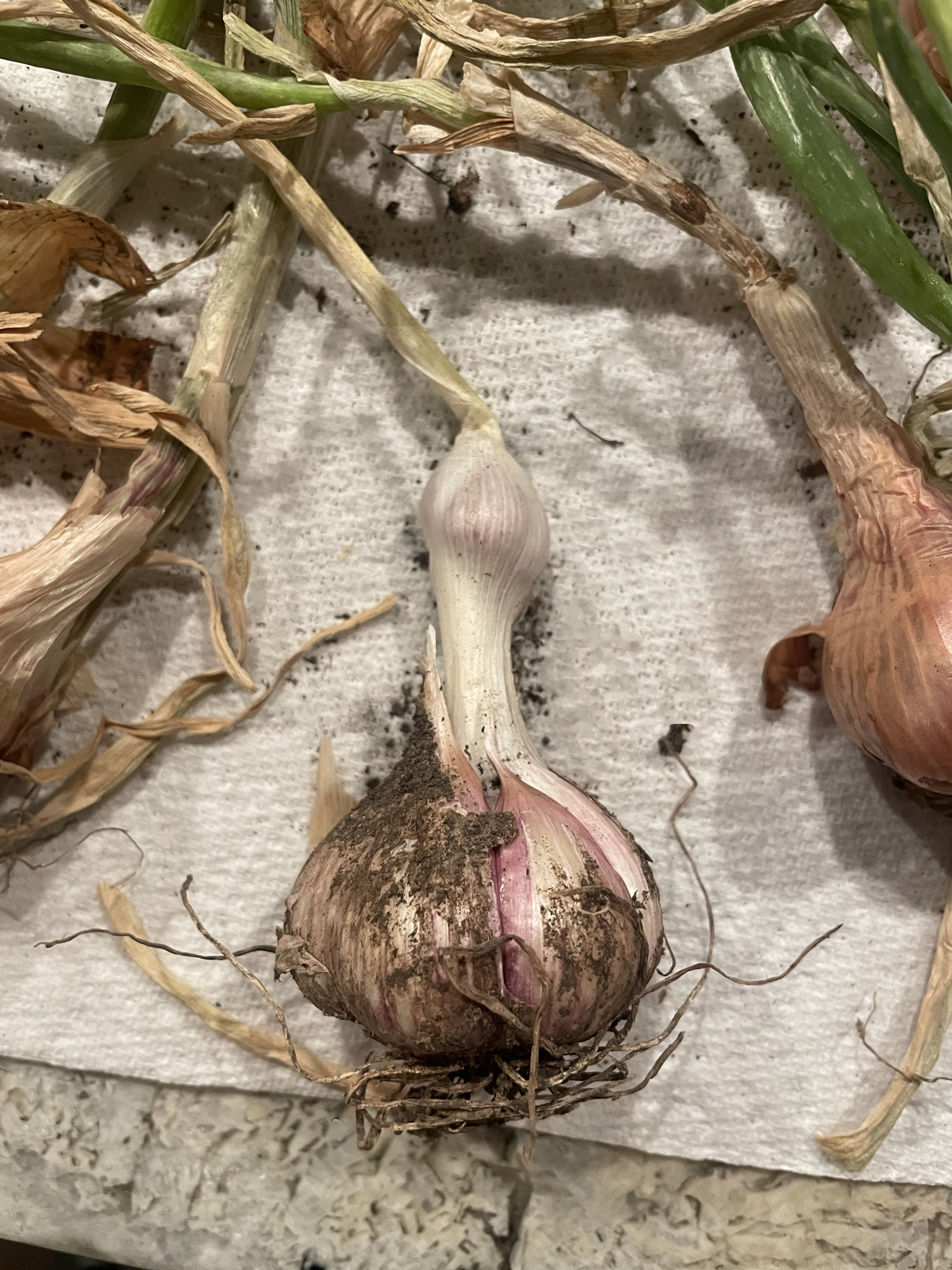
I also found something much stranger: little extra bulbs growing along the stalks, just above the main garlic bulbs underground. I'd continued watering late into the season, and I wondered whether that contributed.
These are two different issues. Late harvesting can cause garlic wrappers to deteriorate and cloves to separate. The extra bulbs appear to be secondary growth, which can have several possible causes.
What I'll do differently: Keep a closer eye on harvest readiness, taper watering as the bulbs mature, and harvest before those protective wrappers begin falling apart.
Pictured: My own garlic harvest, with splitting bulbs and unusual secondary growth circled in red.